Summary
An eighteen year old woman, named only as middle sister, walks around reading nineteenth century novels and is noticed by a much older paramilitary figure known as the milkman. He never touches her. He simply appears, knows her movements, hints that her maybe boyfriend, a mechanic, could meet a car bomb, and lets the implication do the work.
Within weeks the community has decided she is his, and her denials only confirm it. Nobody in this unnamed city in an unnamed conflict is named in the ordinary way: there is maybe boyfriend, third brother in law, the real milkman, somebody McSomebody. That refusal to name is the book's method and its subject, because this is a place where saying anything plainly is dangerous.
The prose is long, looping and digressive, and it takes real adjustment. The chair of the Booker judges compared the difficulty to walking up Snowdon, which is fair: it is effortful and entirely doable, and the view is the point.
What it captures better than any novel of the Troubles is not the violence but the surveillance, the rumor and the exhausting work of appearing normal. It is also genuinely funny throughout, in a deadpan register that keeps arriving just when the pressure becomes unbearable.
Give it forty pages before deciding. Almost everyone who abandons it does so in the first thirty, and almost everyone who reaches the end says the difficulty was the point rather than an obstacle in front of it. Read it aloud in your head if the sentences start to slide.
Historical Context & Significance
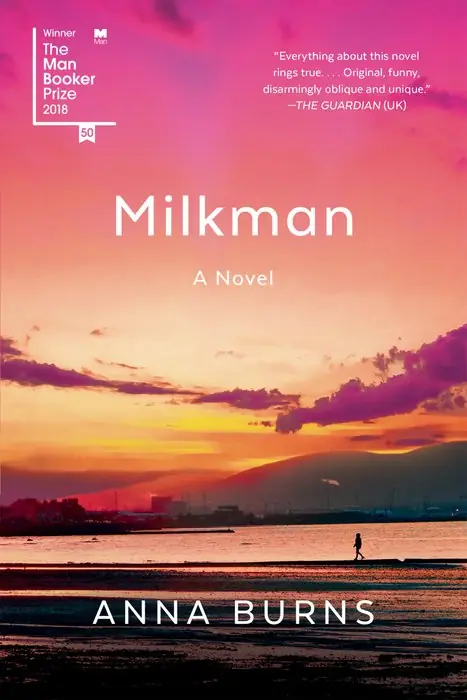
Milkman won the Booker Prize in 2018 and the 2018 National Book Critics Circle Award for Fiction. Anna Burns became the first writer from Northern Ireland to take the Booker. The prize is fifty thousand pounds, and Burns had been living in poverty and chronic pain, on benefits and using a food bank, when she wrote it.
Kwame Anthony Appiah, chairing the judges, said none of them had ever read anything like it, praising a distinctive voice that challenges conventional thinking and form, and describing a story of brutality, sexual encroachment and resistance threaded with mordant humor, set in a society divided against itself and exploring the insidious forms oppression takes in ordinary life.
The novel was widely described as difficult, and the resulting argument about whether prize winners should be demanding became a story in itself, driving sales rather than suppressing them.
Where to get it
We may earn a commission if you buy through these links, at no extra cost to you.
Opens WorldCat, a catalog of library holdings run by the nonprofit OCLC. We do not ask for or receive your location.