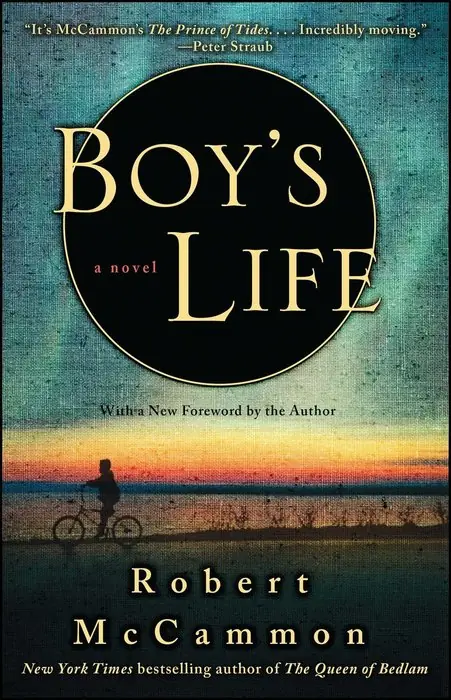
Summary
Zephyr, Alabama, 1964: twelve year old Cory Mackenson is riding the milk route with his father before dawn when a car runs off the road into Saxon's Lake, water so deep the town calls it bottomless. His father dives after the driver and surfaces changed, because the man behind the wheel was dead before the water, handcuffed to the wheel, beaten, a wire knotted around his neck, and the lake takes him anyway. The murder nobody else saw becomes the thread through Cory's year, and the year is the book: a full four seasons of Southern boyhood rendered at the pitch of myth.
McCammon's gamble is to let the magic and the mystery share the page without adjudication. Zephyr contains Old Moses, the monster said to live in the river; a carnival triceratops that may be only an abused rhinoceros; a hundred year old Black matriarch called the Lady who commands genuine powers, or genuine respect, the book declines to separate them; the town's ghosts, literal and civil rights era both, the Klan, and Cory's dreams of the four girls killed in the real 1963 Birmingham church bombing. Around the edges, Cory keeps pulling the murder's thread, a green feather, a winged skull tattoo, a wire garrote, until it leads where the reader least wants it to, and the boy detective plot resolves into something sadder: the discovery that adults are afraid, that the war never ended for some of them, and that growing up is mostly learning what the magic was protecting you from.
The original hardcover runs to four hundred and forty pages, and the book is loose jointed and episodic.
It is best for readers who want the boyhood summer book done at full scale; Kirkus heard strong echoes of King and Bradbury in it.
Historical Context & Significance
Boy's Life won the Bram Stoker Award for 1991 and the World Fantasy Award for best novel, a double for a book Kirkus called "a giant step apart from his popular horror/suspense novels" and "by far McCammon's finest book." It was also a Literary Guild dual selection. At the World Fantasy Awards it beat Emma Bull's Bone Dance, Charles de Lint's The Little Country, Jonathan Carroll's Outside the Dog Museum and James P. Blaylock's The Paper Grail.
The book marked McCammon's move away from horror, but after Gone South (1992) he left his publisher, clashed with an editor at a new one over the historical novel Speaks the Nightbird, and stopped publishing until that book appeared in 2002, the first of his Matthew Corbett novels.
McCammon, who grew up with his grandparents in Birmingham, called the book a "fictography," and Kirkus read it as his "fictional autobiography."
Where to get it
We may earn a commission if you buy through these links, at no extra cost to you.
Opens WorldCat, a catalog of library holdings run by the nonprofit OCLC. We do not ask for or receive your location.